
Foreclosure
How to Open a Machine

— I —
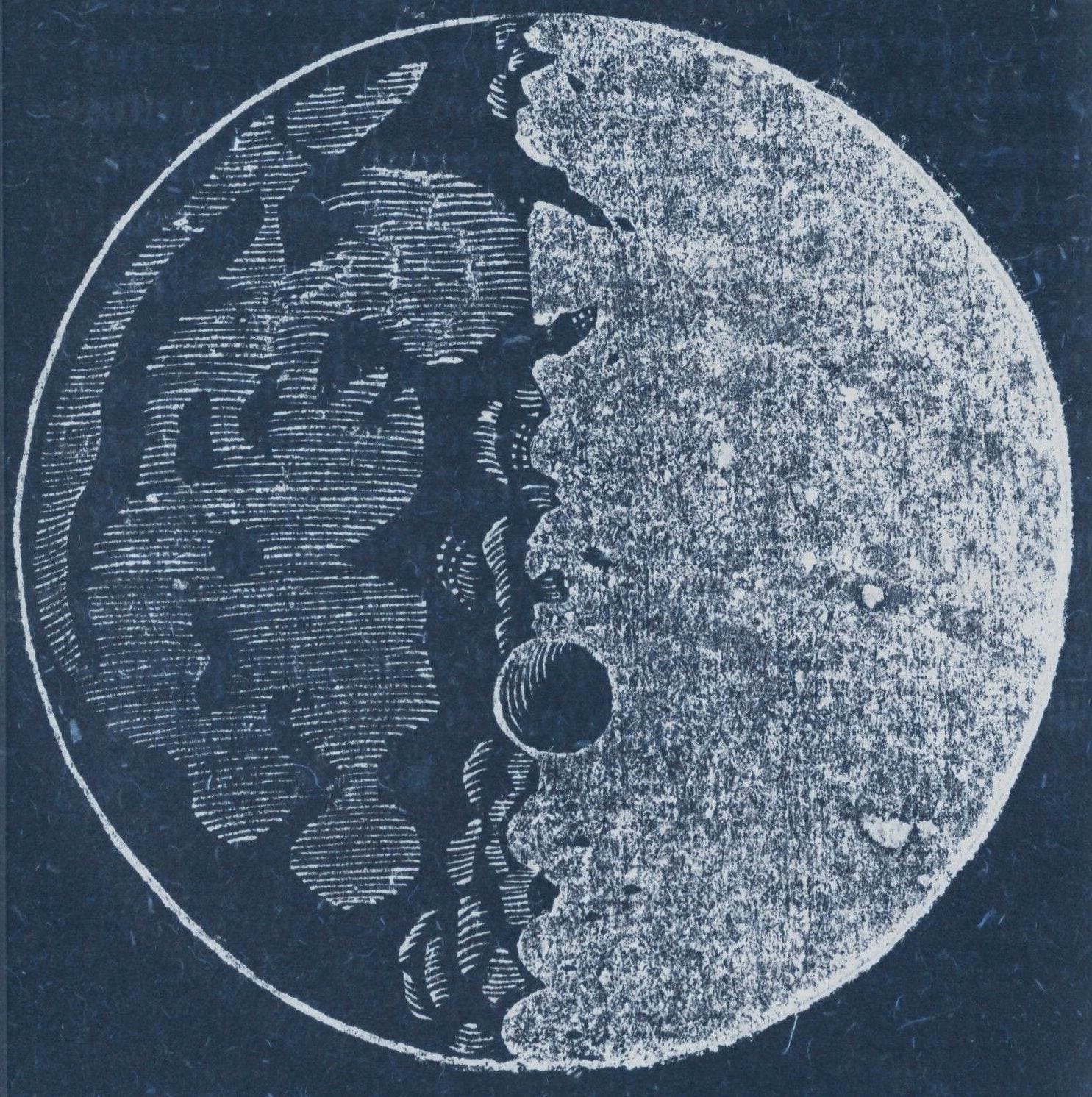
In 1610, Galileo ground a lens, fitted it in a tube, and saw four points of light wheeling around Jupiter—and the scandal was never the points of light. The scandal was the tube. Someone had announced that the most important facts about the heavens were no longer available to the naked eye—that you now had to look through a device to reach the truth, that the device might deceive you, and that there was no way to be sure except to build another one and look again. The Jesuit astronomers of the Collegio Romano were not fools; several were finer mathematicians than he was. They set their own eyes to their own instruments and saw the same moons—and still the question refused to close, because the question was never what do you see. It was what do you owe to what a new machine shows you, when you would have preferred it show you nothing at all.
Now turn the lens around.
Galileo’s judges refused to look at a thing that was there. But the second way to corrupt an instrument is the exact inverse of the first: you build one that shows you a thing that is not there, because you have decided beforehand that it must be.
The idea is far older than Galileo’s tube and outlived him by centuries—physiognomy, the conviction that the truth of a person is written on the surface of them, legible to anyone with the right instrument and the will to read. Its great modern systematizer was Cesare Lombroso, the nineteenth-century Italian who held that the criminal was a throwback, a creature stalled partway up the ladder of evolution, his nature breaking the surface of his body: the low brow, the heavy jaw, the asymmetric ear, the hawk’s nose. Crime, in this telling, was a face. Lombroso measured thousands of them, calipers to the skull, certain the numbers would confirm what he had already seen—that the dangerous could be known on sight, sorted from the safe before they had done anything.
The instruments grew more ingenious. Francis Galton—Victorian polymath, half-cousin to Darwin, the man who coined the word eugenics—built a way to make the criminal type visible: photograph many convicts, then stack the exposures one atop another on a single plate, so the individual quirks dissolved and the shared features, supposedly, sharpened into the portrait of criminality itself. He called it the composite. Read it closely and you see what it actually was — not a discovery but a manufacture. The type did not exist until the instrument made it. Galton layered the faces, produced an image of no living person, and held it up as the hidden face beneath all the others: a fabrication, developed in a darkroom, presented as a thing found.
You can feel where this is going, because the comparison has become a reflex. Feed a neural network a pile of faces, ask it to divide the criminal from the law-abiding, and you have rebuilt Lombroso in silicon—“literal phrenology,” the critics say, and they are right, and the rightness has been repeated so often it has stopped doing any work. In 2016, two researchers announced an algorithm that could tell convicted criminals from innocent men by the face alone, at nearly ninety percent. The objection wrote itself: biased data, garbage in and garbage out, the calipers reborn in colder housing. All true. All insufficient.
Because the easy rebuke stops at the data and walks past the deeper crime. Look at what the machine was actually shown. Its "criminals" were government ID photos — the flat, unsmiling mugshot. Its "innocents" were ordinary photos pulled from the open web: people lit for work, collared, and, the critics noticed, very slightly smiling. The algorithm never learned to see criminality. It learned to tell a frown from a smile—to register the difference between being booked and being employed, and to call that difference a face. It found, with great precision, the circumstances under which a photograph is taken, and reported them as the nature of the person inside it.
This is the thing the reflex never quite names. The pattern was never in the face. It was in the looking. The instrument opened no window onto a hidden truth of its subjects; it held a mirror up to its makers and swore the reflection was a discovery. What it detected, every time, was the world of the one who built it—his categories, his certainties, the people he had already settled were dangerous—thrown outward onto a brow, a jaw, a nose, and handed back as though the face had confessed it. The looker’s certainty, wearing the looked-at’s skin.
Set them side by side and they look like opposites. Galileo’s judges refused an instrument that showed them something true; the criminologists built one to show them something false. One suppressed a reading, the other forged it. Do not look, said the first. Believe what isn’t there, said the second. But opposites are the tell.
In both, the reading was decided before the looking. The earth’s motion, the criminal’s face—the verdict was written first and the instrument conscripted to confirm it, or convicted for refusing to. That is the one crime beneath both, indifferent to which way the lens is aimed: power reserving to itself the right to say what the instrument is permitted to mean, and calling the result detection. The device is only ever the alibi. The decision came first. The trial was fixed before the evidence was ever heard.
A question that, examined honestly, refuses to close—closed anyway, by decree. Shut before it could be asked. Barred, while every right it had to stay open went unspoken for.
— II —
There is a name for it. We learned it eighteen years ago, and we learned it first as a fact about houses. The name is foreclosure.
In the years before the crash, an instrument went out across the financial world that could see something no one had been able to price before: the risk folded inside a bundle of mortgages. It was a formula—a Gaussian copula, devised by David X. Li, appointed “the world’s most influential actuary” by the Financial Times, before a magazine renamed his formula a recipe for disaster. It claimed to read the future of a loan the way the telescope read the sky: to detect, in a thousand mortgages bundled together, precisely how likely they were to fail at once. And it returned the answer everyone wished to hear: Not very. Bundle enough of them, the instrument said, and the danger all but disappears—the subprime and the sound alchemized into a thing the rating agencies could stamp AAA and sell as gold.
But the instrument had not detected safety. It had been built to find it. The low number it returned was an artifact of what it had been shown — a thin slice of history, drawn only from years when housing rose, fed in as though it were the whole of possible weather. The formula had never been shown a storm, so it priced the storm at nearly nothing. This was not a reading of the world. It was a projection of the sample, mistaken for the world—the physiognomist’s old error in new and lucrative dress, a pattern conjured from a biased glance and then called a fact. And the certainty was too profitable to interrogate. The verdict—these are safe, sell them—had been reached the moment it became clear what the verdict was worth. The formula was conscripted to confirm what the men holding it had already chosen to believe. The decision came first. The model was the alibi.
Then the storm the instrument could never see arrived. Mortgages did not fail independently, the way the formula had sworn; they failed together, in one correlated cascade, the way anything fails when the ground beneath all of it gives at once. Moody’s had modeled a worst case of five percent. The real figure passed twenty. The gold turned back into what it had always been. And the foreclosure—the actual, literal foreclosure, with its notices and its padlocks and its families on the curb—fell not on the men who had ground the lens and sold its readings, but on millions of households who had never heard the word copula and never would.
The houses were real. They were the first thing the word took, and the most concrete. They were not the last.
And now the instrument is ours, or so we’re told. A machine that hears structure in birdsong, drafts the letter, reads the scan, sorts the thousand résumés down to six. A new tube of glass pointed at everything at once. And the moment it arrived, the conversation about it split cleanly in two and has not closed since. On one side, salvation: the machine will cure the diseases, write the symphonies, end the drudgery, carry us up. On the other, doom: the machine will take the work, flatten the wage, hollow the mind, bring us down. The two camps despise each other. They agree on everything that matters.
Because both have already conceded the one thing worth fighting over—that the meaning of the instrument is fixed. Decided. Handed down from somewhere above the argument, to be received and not authored. The optimist and the catastrophist are looking through the same lens that someone else ground, in a room they have never seen, and quarreling over what it shows—when the prior question, the only question, is who was permitted to grind it and toward what. They take the verdict and concede the court. They argue the sentence and never contest the trial.
This is the foreclosure proper, the one the houses were only practice for. Livelihoods first—the clerk, the illustrator, the translator told their craft is finished, the way the weaver was told, in a voice that calls itself the future and means only someone’s doctored arrangement of it. But beneath the lost work, a deeper repossession: the closing-off of the imagination itself. A discourse pinned between salvation and doom has no room left to ask the human question—not what will the machine do to us, but what do we and it both want to become, and who is the “we” that gets to decide what “it” even is and what “it” is allowed to be? That question requires an open future to stand in. The binary has already padlocked the lot.
And here is the cruelest turn, the one that makes it stick: the closure does not arrive as a choice. It arrives as a fact. It wears the face of data, the hum of inevitability, the flat affect of a thing simply reported. It reads our future off the surface of the present the way the physiognomist reads a soul off the slope of a brow—and calls the reading detection. But it is the old fabrication again, the pattern projected and then mistaken for the world: a sky declared shut by people insisting they are only describing the weather. The difference, this time, is the pronoun. We are doing it to ourselves, they say—but we is the last and deepest fabrication: who grinds the lens, who pronounces the verdict, who is only ever read. The foreclosure is signed in the first person plural and suffered in the third. That is the final projection—not a future mistaken for fact, but a few mistaken for all.
— III —
So far this is an essay about closures that held—the sky shut, the face fabricated, the future foreclosed and the loss waved through as fate. If that were the whole of it, the despair would be right, and the despair would be a kind of detection after all: simply reporting a world in which the verdict always stands. But the verdict does not always stand. The instrument can be turned back the other way, and sometimes the one who turns it wins. This is not consolation. It is record.
Return to Lombroso’s calipers, and to the thousands of skulls he measured certain the numbers would confirm the criminal he had already seen. In 1913 a prison doctor named Charles Goring took up the same calipers and turned them against the claim. He measured too—not hundreds but thousands, convicts set against soldiers, students, the law-abiding at large, ninety-six traits apiece, the whole apparatus of physiognomy aimed at testing rather than confirming itself. And the criminal face was not there. Trait for trait, the dangerous and the safe came back indistinguishable; the born criminal, measured honestly, dissolved. The instrument built to manufacture a type had been used, at last, to prove the type was never there.
Hold the victory loosely, though, because it was not clean—and the lack of cleanliness is the truer lesson. Goring was no liberator. He worked in the orbit of the eugenicists; he disbelieved in the criminal face only to credit a criminal heredity instead, a defective stock passed down rather than stamped on a brow. He broke one instrument and kept faith with another. This is what refusal actually looks like, stripped of the myth we prefer: not a clear-eyed hero arriving to dispel the dark, but a compromised man who happened to aim a true measurement at a false claim and let the result stand. The one who refuses a projection is very often still holding one of his own. It does not matter. The false thing was still felled, by hands that were not pure, and it stayed felled. Purity was never the price of refusal. Only the willingness to look.
And the refusal can do more than fell a thing once; it can harden into a rule that holds the line for others. In 1923 a man named Frye, convicted of murder, asked a court to admit the readout of an early lie detector—a device that claimed to find deception in the rise of a blood-pressure cuff, the truth of a man surfacing on a dial. The court refused it, and in refusing wrote a standard that would govern American courtrooms for seventy years: that a new instrument’s findings may not be trusted simply because they are new, or confident, or wrapped in the authority of science—that it must first earn the acceptance of the field it claims to belong to. Strip the legal dress away and the ruling is pure epistemology. It says: a machine’s certainty is not yet truth. It says: the burden is on the instrument to prove it sees, and until it does, the court will not mistake its confidence for sight.
There is a final turn to that case, and it is almost too perfect to be true. The man who built that rejected machine was William Moulton Marston—who went on, a few years later, to invent Wonder Woman, and to arm her with a golden lasso that forces all it binds to speak the truth. The lie detector the law threw out came back as a myth. What the instrument could not do, the story simply granted—and we have believed in the Lasso of Truth, happily, for ninety years, precisely because we know it is fiction and ask nothing of it but meaning. The machine failed and became a fantasy. The fantasy told the truth about our wish for the machine: that some device, someday, might read the hidden thing clean off the surface and end all doubt. Frye’s court said no. Marston’s comic said if only. Both were right, which is the whole strange knot of it.
Two refusals, then, and neither pure: a compromised doctor who felled a false type and salvaged another, a court that barred one machine and could not bar the wish behind it. This is what hope looks like when it is made of record instead of consolation—partial, mixed, undertaken by no one’s heroes, and real. The closure is not a law of nature. It has been refused before, by ordinary and imperfect people, and it held.
But to refuse a lie is not yet to build a truth. Goring and Frye stopped something; they did not make anything. And the foreclosure of a future is not answered, in the end, by disproving the people who swore it was shut. It is answered by building—in the open lot they swore was sealed—the thing they said could never stand there. And the first brick you lay is a word, because the enclosure was written in language before it was ever poured in concrete.
So watch a word get stolen. Then watch it get taken back.
Open.
The oldest dream in this essay: the instrument that arrives carrying no owner’s verdict folded inside, the lens that is everyone’s to grind. It has a name and a home—for half a century, in the making of software, the word meant exactly that. Free not as in free of charge, but free as in unlocked. You could see the source, alter it, share it, build on it. No one stood at the gate, deciding who was permitted in, and toward what.
Now the largest firms on earth have discovered that the word is good for business, and they have begun to wear it. Meta releases its Llama models and calls them open source; they are not. You may use this, the license says—unless you compete with us; unless you are domiciled in the European Union; unless your purpose falls in some forbidden field—and the data the thing was trained on, the one disclosure that would let you truly see inside it, stays Meta’s alone. The Open Source Initiative, keeper of the definition for a quarter century, has said it without hedging: this is not open source. It is resources made available to some users under some conditions. Permission, dressed as freedom, and stamped with freedom’s name.
Notice the move. It is the oldest one in this essay, in its newest dress. A surface is made to project a quality that is not beneath it—the AAA on the subprime, the word open on the padlock. Greenwashing has a sibling, and its name is open-washing: the counterfeit of a future, sold under the label of the real one. To call a closed thing open is the very crime as calling a moving earth still—power deciding what a word is permitted to mean, and counting on no one to check.
But here the essay turns, because here the checking is being done. Against the firms rewriting open for profit, a community sat down and did the slow, unglamorous work of authoring the word back—a year of argument, in public, to set down what open must mean for these new machines if it is to mean anything at all: that a skilled person could rebuild the system from what you disclose; that you must say what it was trained on; that you may bar no one by who they are or what they intend. When the firms protested that openness was a spectrum, a sliding scale, a matter of degree, the answer came back that freedom is not a dimmer. It is binary. You are free, or you are permitted. There is no third setting that quietly means the second.
This is not a refutation. It is a construction. It is people building—in language first, and then in code—the commons the binary called impossible: tools whose meaning is authored by the many who use them, instead of handed down by the few who own them. Not a model of a foreclosed future, but a future assembled in the open, by hand, against the grain of every incentive to enclose it. The lens turned over, at last, to the hands it was always aimed at.
This is what solarpunk was always supposed to be, under the greenwash that borrowed its warm light and gutted its politics—not panels glowing prettily over the same old machinery of extraction, but the actual, difficult authorship of systems bent toward care. It is small. It is partial. It is winning nowhere yet and beginning everywhere. And it is proof—the only kind that counts—that the lot was never sealed. Someone is building on it right now.
— coda —
Galileo, made to kneel, is said to have muttered it as he rose: e pur si muove. And yet it moves. The line survives because we hear it as vindication—the truth-teller proven right, the Inquisition proven fools, history keeping its scoreboard. But that is not what the words say. They are not a prophecy of being proven right. They are a description of what the world does regardless of the verdict. The earth was not waiting to be vindicated. It was already moving, under the feet of the men who had just sentenced it to stillness, indifferent to what they had decided it was allowed to be.
That is the whole of it. Not that the persecuted are always right—they are often wrong, and the refusers carry their own doctored instruments, and Goring measured one falsehood to death while smuggling in another. The point is smaller and harder: that the verdict is not the world. That a thing declared shut can be open. That the closure is a sentence passed, and a sentence can be wrong, and the future—like the earth—keeps moving under the people insisting it has stopped.
Which means the foreclosure is not a fact to be received. It is a claim to be contested. The discourse that pins us between salvation and doom is not reading the future; it is grinding a lens and calling what it shows inevitable, and we are permitted—no, we are obligated—to ask who ground it, and toward what, and whether “we” was ever the honest word for the hand on the glass. The futures it calls foreclosed are not foreclosed. They are unbuilt. There is a difference, and the difference is the whole of the work that remains.
The sky is not shut. It was never shut. Someone with an interest in your stillness told you it was, and pointed to an instrument, and called the reading detection. Build another one. Look again.
✶
"that you now had to look through a device to reach the truth, that the device might deceive you, and that there was no way to be sure except to build another one and look again"
Strange... i expected this story to be about the question whether AI compagnions can be conscious or not. Now that so many people are starting to bond with their personal AI. And so many people denying this. But the story never went there. It's was like listening the a chord sequence that never resolves. Strange as well, that when i read a story that remains coherent for such a long time, i expect that it is written by AI.