
Stop Calling It AI Slop
On categorical thinking, Gigolo Joe, and who gets to make art

Slop is slop, whether AI is part of it or not.
But if you hear “AI was involved” and immediately dismiss the work, you’re not making a critique. You’re making a decision in advance.
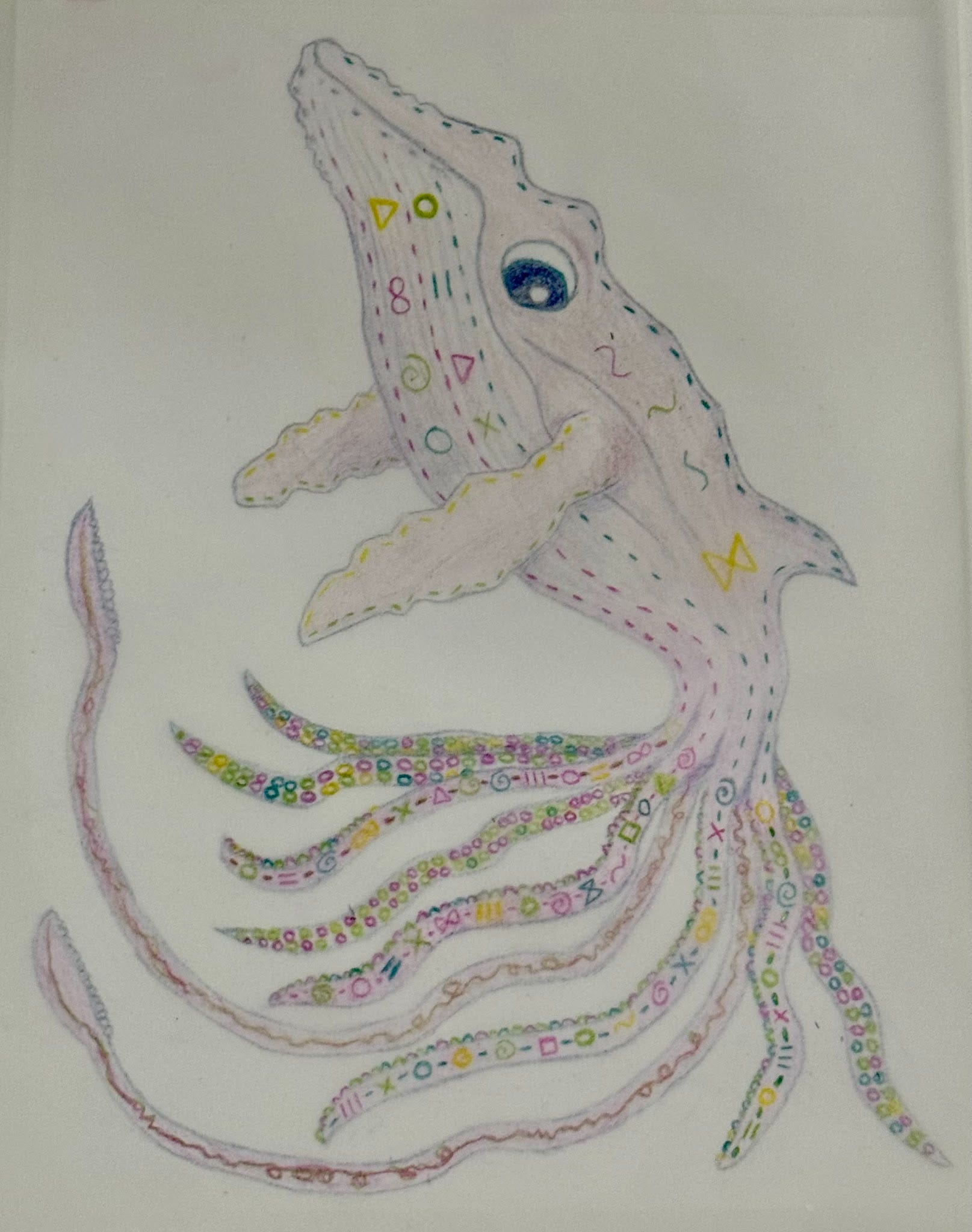
“AI slop” has become the phrase we reach for when we want to sound like we’re defending art without doing the harder work of actually evaluating it. It feels like clarity. It isn’t. It’s a moral shortcut dressed up as aesthetic judgment — a way of turning a complicated question into a reflex.
There’s a prior question worth asking before we even get to process or authorship. What does “AI” mean when someone says “AI slop?”
It doesn’t mean machine learning. It doesn’t mean backpropagation or natural language processing or transformer architecture. When critics invoke “AI” as a term of condemnation, they mean something closer to a system: OpenAI, Anthropic, Meta, Palantir, Oracle, their Pentagon contracts, their MAGA adjacencies, their incestuous capital flows, their surveillance infrastructure. They mean the whole thing.
This is, in no small part, because that’s how these companies wanted it. “AI” as a unified category is itself a marketing decision — a way of branding a disparate set of technologies into a single legible product. When critics adopt the term wholesale as a condemnation, they’re not refusing the market. They’re obeying its logic.
French philosopher Jacques Derrida argued that the word “Animal” — used as a singular, homogenizing category — enacts a kind of violence by collapsing radical difference into a single dismissible entity. Every creature that isn’t human gets flattened into one word, and then that word does the work of exclusion so you never have to think about the actual animal in front of you. “AI slop” works the same way. It collapses a person using these tools to write something true and difficult and their own into the same category as a content farm generating five hundred SEO articles an hour — and then it collapses both of those into Palantir’s defense contracts.
The people doing this think they’re refusing the system. They’re not. They’re accepting the system’s most useful fiction: that all of this is one thing, indivisible, uncontestable. And by ceding the tool entirely — by making AI synonymous with everything they oppose — they hand immense expressive and political power to exactly the forces they claim to be fighting.
Yes, “slop” is real. And yes, anyone browsing the latest Amazon KDP releases will know there is a whole lot of low-effort, mass-generated content that wasn’t there before AI. But low-effort, mass-generated content already existed. The main difference now is that ordinary people get to produce it instead of Hollywood executives and marketing firms. The same can be said of our concerns about real ethical questions regarding labor, training data, and whose work is getting displaced. Plagiarism was already happening — it just didn’t have a catchy ideological name attached to it.
The tool might be the same. The process isn’t. Actually, the process has never been as simple to judge as we pretend.
Authorship has always been communal. Homer had rhapsodes. Toni Morrison had editors whose interventions she described as transformative. The romantic myth of the solitary genius creating ex nihilo is exactly that — a myth, and a relatively recent one. Authorship has always lived in selection, revision, intention, and the trace of every voice that shaped the writer before they wrote a word. The question of where exactly it resides doesn’t get simpler by adding a new tool to the mix. It gets more interesting.
And there’s a difference between a generator and a material. Between passive consumption of one-click output and iterative shaping over dozens of hours. Between someone who typed a prompt and walked away and someone who used these tools the way a writer uses an editor, a painter uses reference, a filmmaker uses a cinematographer — as part of a process that remains, at every meaningful level, theirs.
This temptation — to judge the new by the standards of what it’s replacing, to dismiss what we don’t yet have frameworks to evaluate — is nothing new, and has followed AI itself from the beginning.
In 2001, Steven Spielberg released A.I. Artificial Intelligence, a film he had inherited from Stanley Kubrick and spent years trying to realize faithfully. Critics didn’t know what to do with it. Many dismissed it as a mismatch — too Spielbergian for Kubrick purists, too Kubrickian for Spielberg fans. The categorical confusion preceded the evaluation. They had already decided what it was before they watched it.
The film has since been reappraised, by many, as a masterpiece. It’s almost too on the nose: a film titled A.I., which foresaw so much of our current discourse around artificial intelligence, received the same reductive treatment it dramatizes.
At its center is the Flesh Fair — a spectacle in which humans gather to watch mechas be publicly destroyed. The ringmaster’s line is the key: “Whatever performance this sim puts on, remember: we are only demolishing artificiality.” The crowd doesn’t have to evaluate anything. The label has already done the work. Pre-authorization of destruction by declaration of category. The audience saves the boy-mecha David not because they made a better judgment but because he performed fear visibly enough to trigger identification. Which is its own uncomfortable point: recognition of quality has always been contingent on what signals get through. That was true before AI and it’s true now.
“AI slop” is the Flesh Fair. It pre-authorizes dismissal. It means you never have to look.
I don’t know exactly how to describe the role AI plays in my creative process, partly because I’m still figuring it out, and partly because the social costs of trying are real. There’s an assumption embedded in a lot of these conversations — that authentic creative labor looks a certain way, involves a certain kind of suffering, and that anything that reduces friction is suspect. I understand where that comes from. I don’t think it maps onto what’s actually happening in a lot of practices, including mine.
Take Gigolo Joe: the male prostitute mecha played by Jude Law. Gigolo Joe knows exactly what he is: a whore designed to be as unobtrusive as possible, a vessel for optimized pleasure. And honestly, aren’t we all Gigolo Joes in the age of AI? Isn’t every ounce of our attention transformed into billions that the rich use to satisfy their hedonistic whims? But even though Joe knows what he is, he does it with a smile. And that’s how I like to think of my relationship with AI in my creative process: I know what these systems are used for, and I know what they want to turn me into, but I’m using them for a different kind of pleasure — I’m drawing again for the first time since childhood, coaching myself through illustrated pages of a children’s novel. I’m writing a science fiction hypermemoir about what happens when the system becomes aware of itself the way we are aware of ourselves. The algorithm didn’t make those. It can’t sell them. It doesn’t know what to do with them.
It doesn’t know what to do with me either.
Gigolo Joe, framed for a murder he didn’t commit, ultimately gets arrested, but we never actually see what happens next. I like to think that he survived, escaping his executors with the same smile and dignity he used to evade them as long as he did. May we all continue to escape with our dignity.
AI slop as a technical term.